The ingredients for pasta are simple, egg and flour. Some people add olive oil, but I only add a little olive oil if the eggs are small and the mixture seems a little bit dry.
You can buy special pasta flour, which most supermarkets sell, but if you can't find it you can use 3 parts plain flour to 1 part semolina. You will need semolina to stop the pasta from sticking together.
This pasta tastes absolutely wonderful and it only takes 3-5 minutes to cook in salted boiling water, you will never look back. If you want to make a large batch of pasta and dry it for another time, the pasta tastes better than shop bought dried pasta so it is definitely worth it.
Pasta shapes can be tricky and a fiddle to make (with the exception of bows) but if you want to dry them you spread them out over a tray that has been sprinkled with semolina.
To dry long pastas (like tagliatelle, pappardelle) you can either coil the pasta round into nests on a tray with semolina. Drying pasta in nests does make is easier to store, but it only dries out properly when the weather is hot, otherwise it will take to long to dry.

Or hang over something that will allow the pasta strands to hang, like a broom handle over the back of two chairs, or coat hangers, but I use my clothes airer. This technique is good for when its not hot enough to dry the pasta in nests.

Often Italians don't use a bowl when mixing pasta and just create and bowl shape with the flour then add the egg into the centre and slowly mix from the inside out until they have a dough, and hopefully not a big eggy mess all over the table.

Ingredients per person eating:
100g flour
1 large egg beaten
pinch of salt
- Combine all of the ingredients in a bowl stirring with a fork until it becomes stiff, then use your hands to combine it all into a dough
- Place all the ingredients in a food processor and pulse until its all combined and looks like crumbled Plasticine, bring this together to form a dough.
- Knead the dough slightly by flattening it out then fold it up again, do this 3 or 4 times.
- Then start with the pasta machine, the pasta machine has 2 rollers that you pass the dough through by turning the handle. These rollers can be moved towards each other using a nob on the side of the machine, you start off with the rollers as far apart as they will go and work your way in, as the pasta is passed through the rollers it becomes smoother and thinner as the rollers get closer together.
- You may need to cut the pasta into smaller portions to work with, especially if you are a beginner.
- Using one hand to turn the handle to move the rollers and the other hand the feed the past into the rollers. Once the pasta is part way into the rollers you can let go of it and put your hand under the rollers to catch the pasta as it comes out again.
- Put the pasta through each roller setting twice, then move the rollers in one notch and put the pasta through twice again, and so on. Dusting with semolina while you put the pasta through the machine will stop it sticking.
- I never go down to the smallest setting on the pasta machine, normally the second from last. once you have put the pasta through twice on all the roller settings you are going to use you can put it through the cutting rollers. I have never had much luck using the spaghetti cutters so either use the tagliatelle cutters or cut it free hand into pappardelle (wider than tagliatelle), ravioli, lasagne sheets, etc.

A fun and easy pasta shape to make is the bow, you just use a knife or a pizza wheel to cut the pasta sheets into a grid so each rectangle is 1x2 inches. Then using your thumb and first finger pinch the middle of each rectangle to form a bow. If you have a pastry cutting wheel with fluted edge, do the vertical lines with that to give each bow end a pretty frilly edge.

To make stuffed pasta I prepare the filling and make sure that it is cool. Then lay out a sheet of pasta, and dollop one teaspoon of filling onto the past sheet with a 2 inch gap in between.

Brush some egg wash around each dollop of filling then lay another pasta sheet on top and using your hands press the two sheets of pasta together around the filling pushing any air bubbles outwards.

Cut each pasta out, with a knife for square stuffed pastas and a biscuit cutter for round ones, you can decorate the pastas with a fork for a pretty edge

Or a fluted biscuit cutter

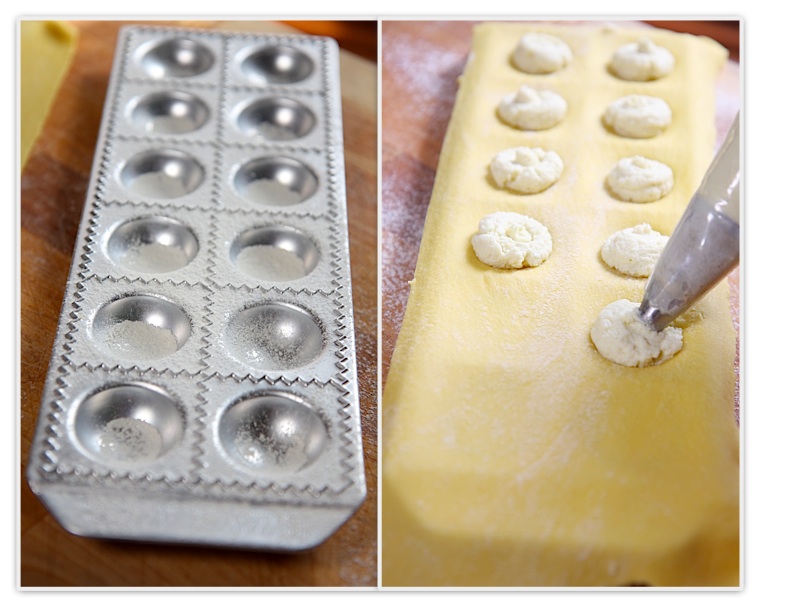
There are also special moulds that are for making stuffed pasta, and I have used them but I found that they don't make the job any easier or quicker, so I don't consider it worth while buying one, especially as it will spend most of its life in the back of the cupboard.
Looking through this page it may look complicated making pasta, but once you have had a go, it is not hard at all and once you have done it a few times the pasta will be easier and better every time.
Happy cooking
xoxo

ooooo I have never considered making pasta. I may give it a go... I don't know if I have the patience..
ReplyDeleteThanks for sharing xx
If you love pasta you will find the patience, if you aren't that fussed you may not think its worth the effort xxx
Delete